
The Three Project Phases
Every construction project moves through three phases:
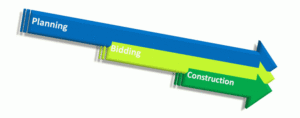 Planning.
Bidding.
Construction.
The duration may vary.
The sequence does not.
Planning Phase
Planning defines what you are building.
Scope. Expectations. Constraints. Priorities.
This phase feels creative and open.
But Planning is not imagination — it is structure.
It establishes the clarity required for predictable pricing and disciplined execution.
When Planning is incomplete, every phase after it absorbs the instability.
Bidding Phase
Bidding tests your Planning.
You interview contractors, compare proposals, negotiate scope, and select the best fit.
This is your primary leverage point.
Pricing clarity gained here protects your budget later.
Pricing left undefined here becomes a change order during construction.
💡 TIP: Change orders are like toothaches.
They often start small — and compound into something painful.
Construction Phase
Construction makes the project physical.
Progress becomes visible. Decisions feel immediate.
It is also where unresolved Planning or Bidding weaknesses resurface as cost, delay, or conflict.
Construction does not create most problems.
It exposes them.
All three phases are necessary.
Compressing sequence increases risk.
💡 TIP: Address issues as soon as they are discovered.
Small problems compound when ignored.
🧭 What Comes Next
The three phases define when work occurs.
They do not define who controls it.
Every renovation has a project manager — whether that role is intentional or assumed by someone else.
Before examining the work inside each phase, you must understand where authority resides.