
Design–Bid–Build Delivery Method
Separate Design and Construction Responsibilities
Design–Bid–Build is the traditional and most common method of delivering a construction project.
The Owner first hires a Design Team to develop the construction documents. Once the design is complete, contractors are invited to bid on the work, and the Owner selects a Construction Team.
The Owner contracts separately with the designer and contractor.
The designer typically provides construction administration services, while the contractor manages the construction work, including subcontractors, materials, and jobsite activities.
This separation provides independent design oversight, but it also creates opportunities for conflicting responsibilities and interests.
Understanding how these relationships evolve is essential to maintaining control.
Stage 1 — Design and Construction Begin
The Owner establishes the Project requirements and hires a Design Team to develop the plans and specifications.
The designer prepares the construction documents, assists with bidding, and may recommend a contractor for selection.
Once the Owner awards the construction contract, the contractor begins coordinating the work.
During construction, the designer typically reviews work for conformance with the design, responds to design questions, and administers the construction contract as authorized.
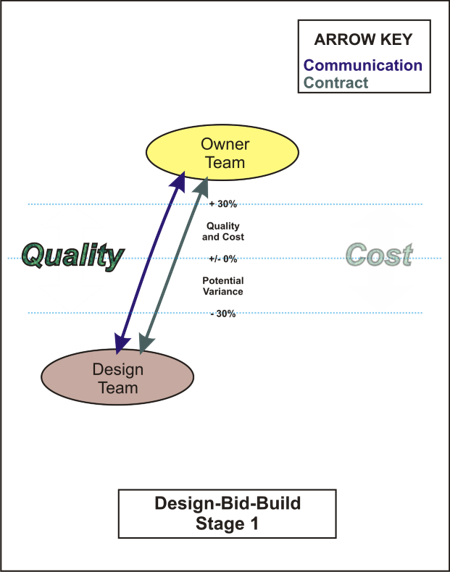
At this stage, communication between the designer and contractor is generally direct and cooperative.
The Owner relies on both professionals to fulfill their respective responsibilities.
The arrangement works best when the design documents are complete, responsibilities are clear, and communication remains coordinated.
Stage 2 — Questions and Discrepancies Emerge
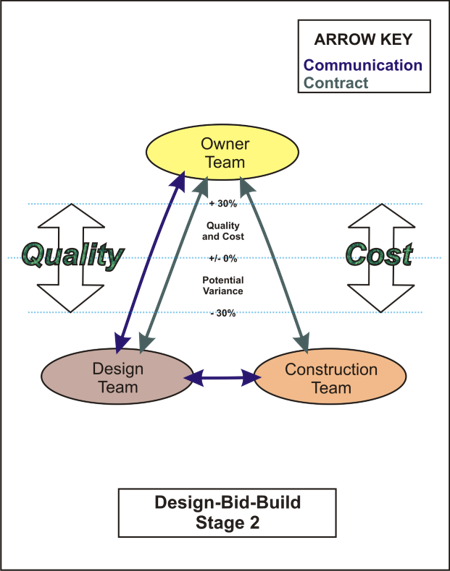
Construction often reveals conditions or details that differ from the design documents.
Contractors may discover missing information, conflicting specifications, or conditions that require clarification.
These questions are a normal part of construction.
However, when discrepancies involve design errors or omissions, determining responsibility becomes more complicated.
The designer may need to revise the documents, while the contractor may request additional compensation or time.
Because the Owner holds separate contracts with both parties, the Owner may become involved in resolving disagreements.
Communication begins to shift.
Problems that initially appear technical can quickly become contractual and financial.
Stage 3 — Competing Interests Develop
When disagreements remain unresolved, the relationship between the Design and Construction Teams can become strained.
The designer may dispute whether an issue results from defective construction or inadequate documentation.
The contractor may argue that additional work, costs, or delays result from incomplete or incorrect design information.
Both parties have legitimate responsibilities to protect their contractual interests.
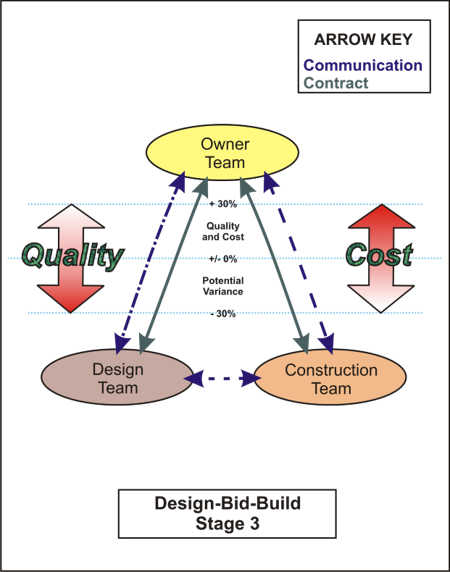
However, those interests do not always align.
As disagreements increase, the contractor may begin communicating more directly with the Owner rather than through the designer.
The Owner can find themselves receiving different explanations of the same problem from two experienced professionals.
Without clear documentation and defined responsibilities, determining accountability becomes increasingly difficult.
Stage 4 — The Owner Becomes the Referee
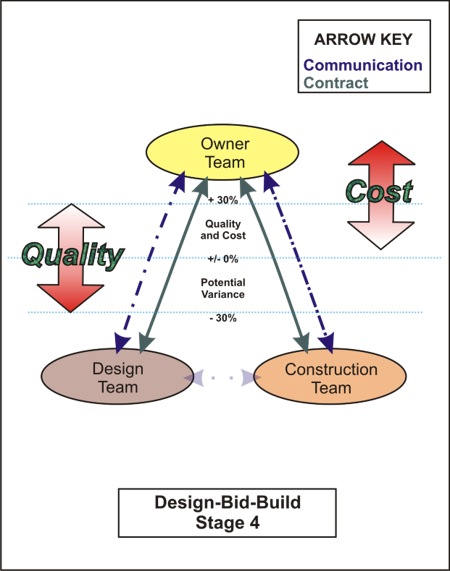
As communication between the designer and contractor deteriorates, more decisions are pushed toward the Owner.
The designer may recommend one solution while the contractor proposes another.
Both recommendations may appear reasonable, yet carry different consequences for cost, schedule, and quality.
The Owner must decide how to proceed, often without the technical knowledge necessary to independently evaluate the competing positions.
Resolving the problem may require additional design services, construction changes, or both.
What began as a disagreement between professionals becomes an Owner decision with financial consequences.
The Owner may ultimately pay to resolve problems they did not create and were not equipped to prevent.
This progression is not inevitable, but it illustrates a significant vulnerability of the Design–Bid–Build structure when project management and accountability are weak.
Where the Method Works Well
Design–Bid–Build can be effective when the Project is thoroughly planned and documented before contractors submit their bids.
Its advantages include:
- Independent design and construction responsibilities.
- Opportunities for competitive contractor bidding.
- Owner participation in contractor selection.
- Independent design oversight during construction.
- A defined scope against which contractor performance can be evaluated.
The method is particularly effective when the construction documents are coordinated, the bidding process is disciplined, and contractual responsibilities are clearly established.
Where the Method Becomes Vulnerable
The method depends heavily on the quality and completeness of the design documents.
Incomplete documentation can produce inconsistent bids, construction changes, and disputes over responsibility.
Because the Design Team often administers the construction contract, the Owner may also depend on the same professional responsible for producing the design to identify and address problems within it.
This does not mean designers are inherently unreliable.
It means independent accountability is limited when professionals are expected to evaluate aspects of their own performance.
The greater the uncertainty in the documents, the greater the opportunity for disagreement over costs, responsibilities, and corrective work.
Maintaining Control
The Owner does not have to accept these vulnerabilities as unavoidable.
Effective management begins before the design contract is signed.
The Owner should establish clear Project requirements, define professional responsibilities, monitor design development, and require coordinated construction documents before soliciting bids.
During construction, questions, changes, and disagreements should be documented and evaluated against the approved scope, contracts, budget, and schedule.
The objective is not to eliminate disagreements.
It is to prevent disagreements from becoming uncontrolled Project decisions.
Design–Bid–Build can produce excellent results when the Owner understands the structure, maintains appropriate oversight, and ensures that accountability remains clear throughout the Project.