
The Risk of Skipping a Building Permit
Skipping a required building permit may seem like an easy way to save time and money.
Some Owners assume that if the work is inside their home, no one will notice.
But unpermitted construction can create consequences that extend far beyond the original Project.
When the Inspector Shows Up
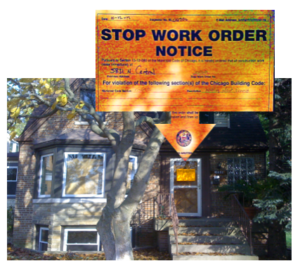
If an inspector discovers construction without a required permit, the municipality can issue a Stop Work Order, bringing construction to a halt.
Depending on the circumstances, the Owner may face:
Delays while obtaining the required permits.
Fines and additional inspection costs.
Removal of completed work to expose concealed construction.
Demolition and reconstruction of noncompliant work.
Unpermitted construction can also create problems long after completion, particularly when selling the property, obtaining insurance, or applying for future permits.
Work completed without a permit does not mean the Owner’s responsibility has ended.

TIP: Remember, building inspectors have their jobs on the line every time they do an inspection. It is not in their interest to allow people to violate or ignore building codes.
When the Consequences Become Tragic
In June 2003, a three-story porch collapsed during a party in Chicago.
Thirteen people died. At least 57 others were injured.
Investigators discovered
that the porch had been constructed without the required permit and contained serious structural deficiencies.
What began as an improperly constructed porch became a tragedy that devastated families and exposed the property owner to substantial legal and financial consequences.
The absence of a permit did not cause the collapse by itself. But the structure had bypassed a process intended to identify dangerous conditions before people were exposed to them.
Construction defects can remain hidden for years. Their consequences may appear without warning.
Why Building Codes Exist
Building codes are not arbitrary obstacles to construction.
Many requirements developed in response to fires, structural failures, electrical hazards, and other preventable tragedies.
Building to code is not exceeding expectations. It is meeting the minimum acceptable standards intended to protect the health, safety, and welfare of people who occupy and use buildings.
Permits and inspections provide an opportunity for independent oversight of work that must meet those standards.
They do not guarantee perfect construction, but they provide an important layer of protection.
The CIY Approach
Before construction begins, determine which permits and inspections your Project requires.
Do not assume a permit is unnecessary simply because the work is small, concealed, or a contractor says one is not needed.
The cost of obtaining a permit is generally small compared with the potential cost of proceeding without one.
A building permit is more than a regulatory requirement. It is part of protecting the Owner, the Project, and the people who will ultimately use what is built.
CIY explains the permitting process in Construction – Get the Construction Permit.