
Design–Build Delivery Method
One Contract for Design and Construction
Design–Build combines the Design and Construction Teams under a single contract with the Owner.
Rather than hiring a designer and contractor separately, the Owner contracts with a design-builder responsible for both designing and constructing the Project.
The design-builder may be a single company or a partnership between separate design and construction firms.
This arrangement simplifies contractual relationships and coordination. It also addresses some of the communication and responsibility conflicts associated with Design–Bid–Build.
However, combining the teams does not eliminate their different responsibilities, priorities, or financial interests.
It changes how those interests are managed—and how much of that process the Owner can see.
Stage 1 — A Single Team Takes Responsibility
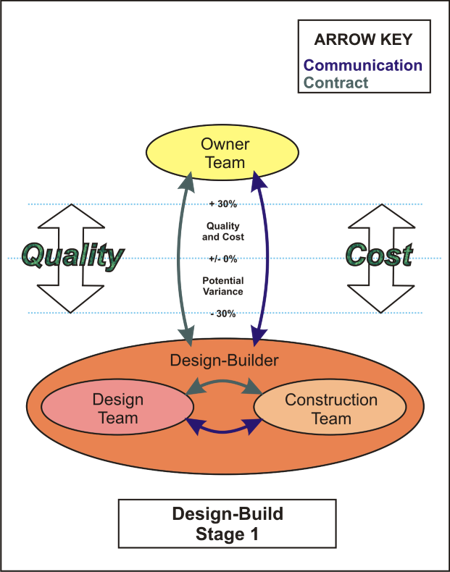
The Owner establishes the Project requirements and selects a design-builder, often before construction documents are complete.
The design-builder assumes responsibility for coordinating design development, construction planning, subcontractor procurement, and construction management.
Because both teams operate under one contractual arrangement, they can collaborate directly on design decisions, construction methods, costs, and scheduling.
This can reduce delays caused by disagreements between separately contracted professionals.
It also concentrates authority.
The design-builder manages and monitors much of its own performance, leaving the Owner dependent on the design-builder for information about both design quality and construction execution.
Simplifying responsibility can improve coordination, but it also reduces the separation that provides independent checks and balances.
Stage 2 — Cost and Design Decisions Intersect
Unlike Design–Bid–Build, where construction pricing generally follows completed design documents, Design–Build often develops design and pricing together.
This allows the design-builder to evaluate construction costs while design decisions are being made.
The arrangement can improve efficiency, accelerate scheduling, and help maintain an established budget.
However, the Owner may commit to a contract price before every material, detail, and construction requirement has been fully defined.
The design-builder may also have considerable discretion over subcontractor selection, materials, and construction methods.
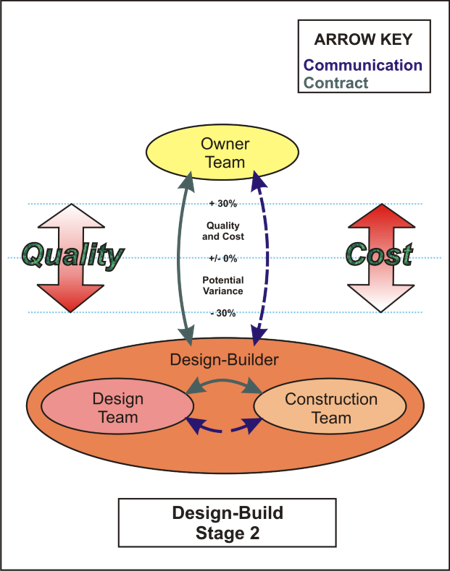
When unexpected conditions, design changes, or pricing discrepancies arise, adjustments must be made within the contractual and financial framework.
These decisions may affect cost, quality, or both.
A defined price does not necessarily mean a completely defined scope.
The Owner must understand what is included, what remains undecided, and which circumstances permit changes to the contract price.
Stage 3 — Internal Decisions Affect Project Outcomes
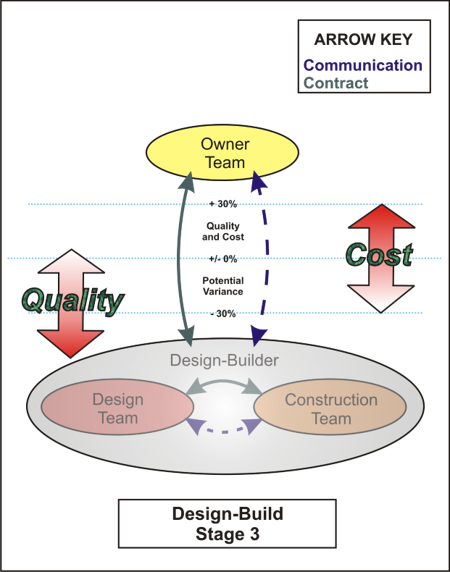
Combining design and construction under one contract encourages the teams to resolve disagreements internally.
This can be beneficial.
Designers and builders can work together to identify practical solutions without requiring the Owner to mediate every technical disagreement.
However, internal coordination also reduces the Owner’s direct visibility into how decisions are made.
When costs exceed expectations, the design-builder may look for alternative materials, construction methods, or design adjustments to protect the Project budget and its financial interests.
These adjustments are not necessarily improper. Value engineering and efficient construction practices can benefit everyone.
Problems arise when cost reductions compromise the Owner’s expectations or approved quality requirements without informed agreement.
Because the same organization is responsible for both design and construction, independent evaluation of these decisions may be limited.
The Owner may see the final decision without understanding the alternatives considered or the compromises made.
Where the Method Works Well
Design–Build can be effective when the Owner wants a streamlined contractual relationship and close coordination between design and construction.
Its advantages include:
- A single point of contractual responsibility.
- Direct collaboration between designers and builders.
- Early integration of construction costs into design decisions.
- Opportunities to shorten the overall Project schedule.
- Reduced disputes between separately contracted teams.
The method can be particularly effective when the Owner’s requirements are clearly established and the design-builder maintains transparent communication throughout the Project.
Where the Method Becomes Vulnerable
Design–Build concentrates responsibility, authority, and information within one organization.
This creates several potential vulnerabilities:
- Pricing may be established before the scope is fully defined.
- Subcontractor and material selection may receive limited independent competitive evaluation.
- Cost-saving decisions may affect quality or performance.
- Internal disagreements may not be visible to the Owner.
- Independent verification of design and construction decisions may be limited.
A Guaranteed Maximum Price (GMP) or other fixed-price arrangement does not automatically eliminate these risks.
The effectiveness of the price commitment depends on the defined scope, allowances, exclusions, contingencies, and provisions governing changes.
Price certainty is only meaningful when the Owner understands what the price actually includes.
Maintaining Control
The Owner does not need to manage every design or construction decision to maintain control of a Design–Build Project.
The key is establishing clear expectations before delegating authority.
The Owner should define Project requirements, performance standards, material expectations, budget limitations, and approval responsibilities before committing to the construction agreement.
The contract should establish how design changes, substitutions, allowances, and cost adjustments are reviewed and approved.
During design and construction, the Owner should receive sufficient information to understand important decisions and their consequences.
Independent professional reviews may provide additional assurance when the Owner lacks the expertise to evaluate technical or financial trade-offs.
Delegating responsibility does not require surrendering control.
Design–Build can deliver excellent results when the Owner understands the arrangement, establishes clear requirements, and maintains visibility into decisions affecting cost, schedule, and quality.