
Owner Agent Delivery Method
Independent Management on Behalf of the Owner
The Owner Agent Delivery Method introduces an independent construction professional whose responsibility is to represent the Owner’s interests throughout the Project.
Rather than relying on the Design or Construction Team to manage the entire process, the Owner hires an Owner Agent, also known as an Owner Representative, to establish and maintain Project controls.
The Owner Agent works directly with the Owner to define expectations, coordinate responsibilities, evaluate proposals, and oversee performance.
The Design and Construction Teams remain responsible for their respective professional services and contractual obligations.
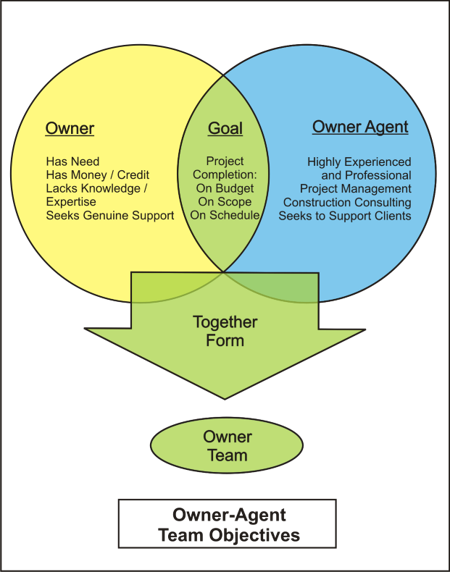
This arrangement preserves the benefits of competitive bidding and independent design oversight while adding professional management dedicated to the Owner.
The objective is to align the Project Teams around clearly defined expectations before competing interests become problems.
Stage 1 — Establishing Project Control
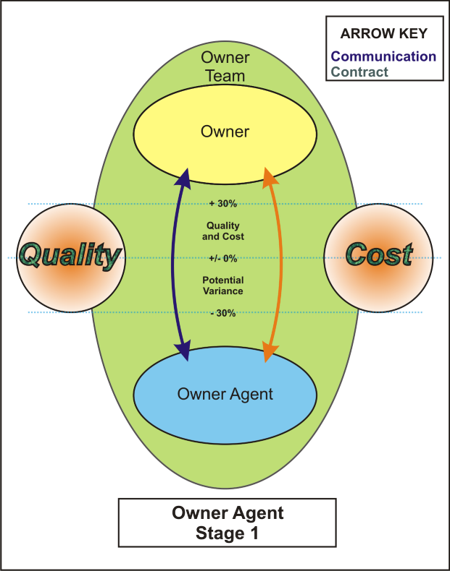
The Owner and Owner Agent begin by defining the Project before committing to design or construction.
Together, they establish the scope of work, budget, schedule, quality expectations, and other Project requirements.
The Owner Agent applies construction knowledge and project management tools to translate the Owner’s vision into measurable objectives.
This includes identifying potential constraints, establishing responsibilities, evaluating risks, and developing the framework for managing the Project.
These requirements form the foundation for selecting professionals, evaluating proposals, and measuring performance.
The Project is organized around the Owner’s objectives before the Design and Construction Teams begin their work.
Stage 2 — Selecting and Managing the Design Team
Once the Owner approves the Project requirements, the Owner’s Agent coordinates the selection of qualified design professionals.
This may include identifying prospective designers, requesting proposals, conducting interviews, evaluating qualifications, and comparing proposed services and fees.
The Owner Agent recommends the Design Team best suited to the Project and assists with establishing the design contract.
Throughout design development, the Owner Agent monitors progress against the approved scope, budget, and schedule.
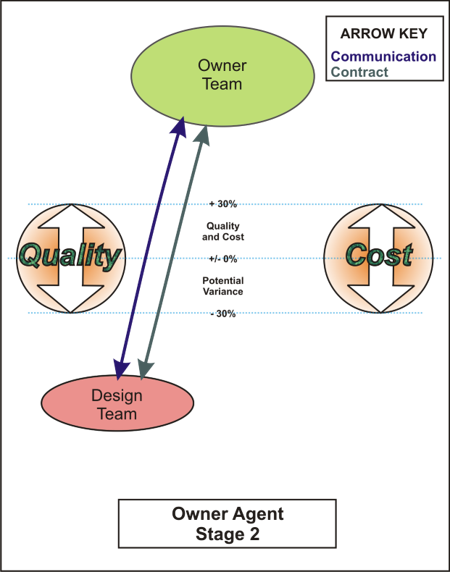
Design decisions are evaluated for constructability, cost implications, and alignment with the Owner’s expectations.
The designer remains responsible for professional design services, while the Owner’s Agent manages the process and helps ensure that the resulting documents satisfy the Project requirements.
Independent management creates accountability between the Owner’s expectations and the Design Team’s performance.
Stage 3 — Selecting and Managing the Construction Team
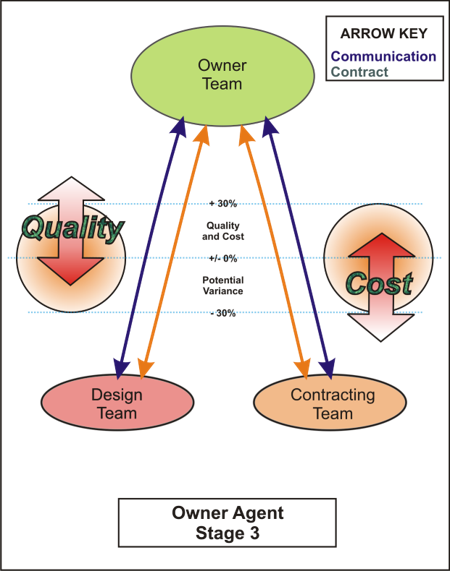
When the design documents are sufficiently complete, the Owner Agent organizes the contractor selection process.
This includes identifying qualified contractors, assembling the bid package, managing bidder questions, evaluating proposals, and assisting with contract negotiations.
By providing bidders with a consistent and clearly defined scope, the Owner Agent helps establish meaningful competition and comparable pricing.
Once construction begins, the Owner Agent coordinates communication, monitors progress, reviews changes, and evaluates performance against the approved documents, budget, and schedule.
The Construction Team remains responsible for performing and managing its contracted work.
The Owner Agent maintains independent oversight, identifies developing problems, and helps the Owner make informed decisions before issues become uncontrolled costs or delays.
The goal is not simply to obtain the lowest bid. It is to secure the best value for a clearly defined scope and maintain that value through construction.
Where the Method Works Well
The Owner’s Agent approach is particularly effective when a Project involves multiple professionals, substantial financial commitments, complex coordination, or significant risks.
Its advantages include:
- Independent management dedicated to the Owner’s interests.
- Early establishment of scope, budget, schedule, and quality expectations.
- Objective evaluation and selection of Design and Construction Teams.
- Greater consistency and comparability in competitive bidding.
- Clearer assignment and monitoring of responsibilities.
- Independent evaluation of proposed changes and their consequences.
- Continuous oversight throughout Planning, Design, Bidding, and Construction.
The method helps maintain continuity as responsibility moves between the Project Teams.
Where the Method Becomes Vulnerable
The effectiveness of the Owner Agent method depends on the qualifications, independence, and authority of the person providing management services.
Potential vulnerabilities include:
- An Owner Agent who lacks appropriate construction or project management experience.
- Unclear authority or overlapping responsibilities between the Agent and Project Teams.
- Insufficient Owner participation in important decisions.
- Additional professional fees that are not justified by the Project’s complexity or management needs.
- Inadequate reporting, documentation, or enforcement of established Project controls.
An Owner Agent also cannot eliminate design errors, contractor disputes, unforeseen conditions, or other construction risks.
Independent oversight is only valuable when it is supported by expertise, clearly defined authority, and disciplined management.
Maintaining Control
The Owner Agent method is built around establishing and maintaining Project control.
The Owner retains authority over major decisions while delegating coordination, evaluation, and administrative responsibilities to a qualified professional.
The relationship should clearly establish which decisions the Agent may make, which require Owner approval, and how the Design and Construction Teams are held accountable.
Effective communication, consistent documentation, and regular evaluation against the approved Project requirements keep the Owner informed without requiring constant involvement in daily activities.
The Owner’s Agent does not replace the Owner’s responsibility. The Agent provides the professional management needed to exercise that responsibility effectively.
When properly implemented, this approach can improve cost predictability, protect quality expectations, reduce avoidable conflicts, and help the Owner maintain control from Dream to Done.